
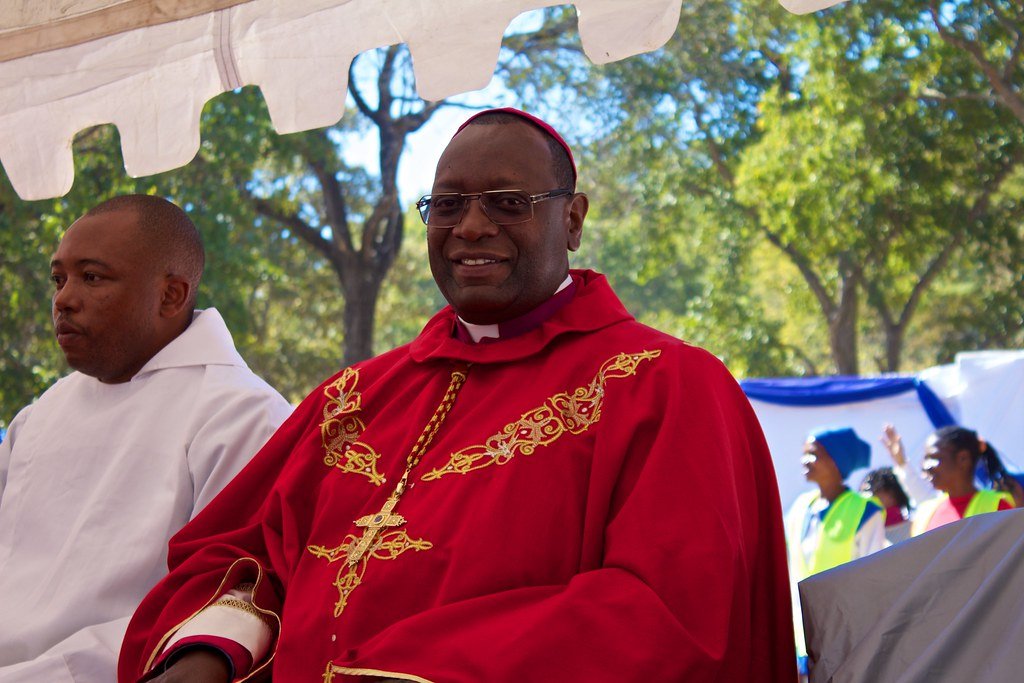
Landmark Ruling: Zimbabwe Supreme Court Recognises UK Divorce Order In Case Involving Bishop Tawona Makoni
In a precedent-setting ruling, the Supreme Court of Zimbabwe has upheld the enforcement of a United Kingdom divorce judgment, ordering Julius Tawona Makoni, a former banker and Anglican Bishop, to transfer properties to his ex-wife, Pauline Mutsa Makoni. This landmark decision, delivered in July 2025, overturns a 2023 High Court ruling and firmly establishes that Zimbabwean courts will recognise foreign divorce orders where the issuing court had proper jurisdiction and applied principles equitable to those in Zimbabwe.
What Was The Case About?
The case centred on a divorce and financial settlement granted by the High Court of Justice in England in December 2014. The couple, married in Harare in 1983, had lived in both Zimbabwe and the UK before separating in 2010. Pauline Makoni filed for divorce in the UK, and after extensive proceedings, the English court issued a financial order.
The UK court awarded Pauline several properties, including the matrimonial home in Harare. It found that Julius Makoni had failed to make a full and frank disclosure of his assets, which included shares in NMBZ valued at over US$1.3 million and various other properties and offshore accounts. The English court relied on the principle that a non-disclosing party should not benefit from their failure to be truthful.
Julius Makoni challenged the enforcement of this order in Zimbabwe, arguing it was contrary to public policy as it left him “homeless.” The High Court agreed with him in 2023. However, the Supreme Court unanimously found this to be a “gross misdirection,” noting that Makoni had not challenged the UK court’s jurisdiction during the original proceedings and had even attempted to appeal the judgment there.
Why This Ruling Is a Critical Precedent
This judgment provides much-needed clarity on the recognition of foreign divorce orders in Zimbabwe. The Supreme Court emphasised that the English court applied equitable principles “strikingly similar to our own” and that the outcome was a direct consequence of Makoni’s non-disclosure.
The court stated, “Our courts do not reward the perpetrator of a wrong.” This sets a powerful precedent that non-disclosure of assets in financial proceedings, whether domestic or foreign, will be viewed dimly by the judiciary.
Are Foreign Divorce Orders Recognised in Zimbabwe?
Yes. This ruling reinforces the legal framework provided by Section 12 of the Matrimonial Causes Act, which allows for the recognition of foreign divorce, judicial separation, or nullity of marriage orders.
It is crucial for individuals who obtain a divorce overseas to have it registered in Zimbabwe to update their marital status officially. Failure to do so means the parties may still be considered legally married within Zimbabwe, which can affect rights to remarry, inheritance, and property ownership.
How to Register a Foreign Divorce Order in Zimbabwe
The process for registering a foreign divorce order involves several key steps:
-
Engage a Lawyer: You must instruct a lawyer in Zimbabwe who specialises in family law to handle the registration.
-
Identify the Correct Court: The court where the registration occurs depends on the type of marriage.
-
For civil unions, the application is made to the High Court of Zimbabwe.
-
For customary marriages, the application is made to the Magistrate’s Court.
-
-
Application for Recognition and Enforcement: Your lawyer will lodge an application with the relevant court, providing the foreign divorce order and other supporting documents. The court will then determine if the foreign order meets the requirements for recognition, such as the issuing court having had jurisdiction and the order not violating Zimbabwean public policy.
Contested vs. Uncontested Divorce: A Primer
Understanding the type of divorce you are facing is essential. Data from the Judicial Service Commission shows a sharp rise in divorce cases in Zimbabwe, with 3,214 cases recorded in 2024 compared to 2,149 in 2023.
-
Uncontested Divorce: This occurs when both parties agree on all terms, including the irretrievable breakdown of the marriage, custody of children, maintenance, and distribution of property. It is generally faster, less expensive, and less emotionally draining. The parties are not necessarily required to attend court.
-
Contested Divorce: This is an adversarial process where the parties cannot agree on one or more issues. It is more time-consuming, costly, and places a greater strain on all involved. However, a contested divorce can become uncontested if the parties reach an agreement at any point.
Common Mistakes to Avoid
Based on analysis of legal proceedings and expert commentary, here are common pitfalls to avoid:
-
Non-Disclosure of Assets: As the Makoni case demonstrates, hiding assets is a serious misstep that can severely prejudice your position and lead to an adverse costs order.
-
Failing to Regularise Your Status: Not registering a foreign divorce in Zimbabwe can lead to significant legal complications down the line, including issues with remarriage and property rights.
-
Rushing the Process Without Legal Advice: Divorce affects your status, finances, and children. Engaging a knowledgeable family lawyer from the outset is critical to navigating the process correctly.
-
Letting Emotion Override Pragmatism: While divorce is emotional, allowing conflict to dictate decisions often leads to higher legal costs and a more protracted process, ultimately depleting the marital estate for both parties.
-
Ignoring the Impact on Children: Using children as leverage or failing to shield them from conflict can cause long-term emotional harm. The child’s best interests are the paramount consideration for the court.
Final Thoughts
The Supreme Court’s ruling in the Makoni case is a significant step towards legal coherence for multinational families and the diaspora community. It affirms that Zimbabwe’s courts will uphold justice and equity, respecting international rulings that are founded on sound legal principles. For anyone navigating a divorce, especially with cross-border elements, this case underscores the paramount importance of transparency, obtaining expert legal counsel, and taking the necessary steps to ensure your marital status is legally recognised in all relevant jurisdictions.
Disclaimer
This article is for informational and awareness purposes only and does not constitute legal advice. It is not a substitute for advice from a registered legal practitioner. Laws, procedures and court practice change over time; you should consult a qualified, registered lawyer in Zimbabwe (or a lawyer authorised to practise where your matter arises) before taking any steps based on the information in this article. Neither the author nor the publication accepts responsibility for any loss or consequence arising from reliance on this material.